You’ve made up your mind—you’re ready to set off on your backpacking or round-the-world adventure. You’re already dreaming about your route, the countries you’ll visit, and the foreign cultures. But where are you going to put all your stuff? Traveling with a suitcase is a total pain in countries with limited infrastructure. You’ll always need a taxi or bus and will never be able to cover long distances on rough roads.
The solution: a backpacker’s backpack—or, as described below, a suitcase backpack.
The world travel backpack is one of the most important items on your trip around the world. You should definitely ask yourself the following 8 questions before buying one:
1. How big—or what volume—does my backpack need to be?

I’m traveling with the Deuter Aircontact 45 10-liter (no longer sold). It’s great, and I’m incredibly satisfied with it.
Why a 40–50-liter backpack is more than enough for my trip around the world.
When backpacking, it’s better to pack light. There are certain multifunctional items that save a lot of weight and space. (More in my packing list.) I also don’t bring any books anymore—I have everything on my smartphone or e-reader. Plus, a smaller backpack costs less and is lighter.

When is it worth buying a backpacking backpack with a capacity of more than 60 liters?
Are you planning longer camping trips far from hostels or other lodging options? In that case, you’ll need a lot of extra camping gear on the go, and it’s worth investing in a large “survival backpack” with a capacity of 60 liters or more.
2. Take your pack weight and body weight into account when choosing!
My trekking backpack weighs about 14 kg, which puts me 3 kg below a quarter of my body weight.
Don’t forget to factor in the weight of water bottles and your daypack, too. My luggage keeps getting heavier because I’ve bought various souvenirs along the way. I’ve always noticed this at the luggage scales in every airport.
When choosing a backpack, pay attention to the following features and quality.
3. Carrying System
- Especially if you’ll be going on long hikes with your backpack, it’s important to pay attention to the carrying system.
- Is it quick and easy to adjust? Are the straps high-quality and comfortably padded?

4. Workmanship:
- Does it give the impression of high quality?
- What about the hip belt? It’s important because it carries most of the weight. This reduces the load on your back and makes the backpack feel lighter. For better comfort and weight distribution, follow the packing tips below.

Usually, you can also quickly use the straps to pull the backpack snugly against your body, which improves comfort. Here’s a video on how to properly adjust your backpack.
- Trekking backpacks are now available in different back lengths, so be sure to measure your back beforehand. Measure the back length from the top of your shoulder blades to the upper part of your hip bone.
5. Ventilation System:
- I’m not a fan of the ventilation mesh panels on the back, which cause the backpack to bulge and make it harder to pack. It’s also harder to carry because the weight of the backpack shifts further back. Backpack manufacturers have developed smart alternatives. However, if you’re traveling a lot in warm climates, the mesh back system is worth it because of the better ventilation.
- Waterproof
: Backpacks are almost never waterproof; they’re water-repellent and usually come with a rain cover. If not, you can buy one separately*. But it’s better to use the backpack cover one more time. It protects your backpack during transport. And if it does rain, you’ll be on the safe side. If it wears out over time, you can replace it more affordably than having the backpack repaired. - Other Workmanship / Quality of the Backpacking Backpack
Are the zippers and seams well-made?
Are there enough straps to attach a sleeping pad or other items to the outside?
Does the backpack have an additional opening to access the contents at the bottom? This way, you can immediately access items in the lower section as well.
6. How much should a backpacking backpack cost?

Spending more than 100 euros on a backpack might sound like an outrageous amount at first. But if you can use it for many years, the purchase price quickly pays for itself.
Nothing is worse than having to deal with torn zippers and broken shoulder straps while on the road. Not to mention the poor comfort and subsequent back pain caused by some cheap models.
But you don’t need to spend much more than 200 euros—anything beyond that isn’t worth the extra cost.
#ReadingTip: How to raise money for a big trip?
A little pricing tip:
New models hit the market at the beginning of the year—you can often score a bargain by buying last year’s model.
7. Which backpacking/trekking backpack should you buy?

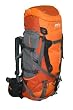
Below, I’ve put together a table with selected models, but it’s not that easy to make a specific recommendation. As I mentioned, I use a Deuter Aircontact and have never had any problems with it.
| Model | Tatonka Yukon 50-70L | Jack Wolfskin Denali 55–70L | Aspen Sport 65L | Outdoorer | Montis Nadel 60L |
 |  |  |  |  | |
| Advantages | – Durable material – Very soft hip belt | – Comfortable to wear – Good packing options – Adjustable back length | – Very affordable | – very affordable | – Good quality |
| Cons | – Heavy | – Heavy | – On long trips, I’m not convinced by the quality – Heavy | – No rain cover | – The capacity seems smaller in reality |
| Price as of Jan. 9, 2017 180 EUR | Price as of Jan. 9, 2017 Starting at 140 EUR | Price on Jan. 9, 2017 60 EUR | Price on Jan. 9, 2017 99 EUR | Price as of Jan. 9, 2017 110 EUR | |
| Current Price & Info | Here* | Here* | Here* | Here* | Here* |
Outdoor gear manufacturers have responded to this trend as well and have introduced backpacks specifically designed for the female physique.
Women’s Backpack
Women’s backpacks have a shorter back panel, narrower shoulder straps, and a differently designed hip belt.
| Tatonka Isis | Vaude Women’s 46 L | Deuter ACT Lite 45 L | Montis Moana |
|---|---|---|---|
 |  |  |  |
| Price as of Jan. 9, 2017 159 EUR | Price as of Jan. 9, 2017 129 EUR | Price as of Jan. 9, 2017 180 EUR | Price as of Jan. 9, 2017 75 EUR |
| More Info / Order* | More info / Order* | More info / Order* | More info / Order* |
8. Is a suitcase backpack a good alternative for you?
It’s very practical because you just put the suitcase backpack on your back and can open it just like a suitcase. This lets you access everything quickly and easily without any trouble. You can also pack it from the top just like a regular backpack. However, there are also standard hiking backpacks that feature a large front compartment. Suitcase backpacks often even come with a detachable daypack. This is simply convenient because you don’t have to carry the daypack across your chest.
However, if you have to carry it for longer periods—not to mention on actual trekking trips—the scales tip in favor of the standard backpack. The suitcase-style backpack doesn’t stand a chance there.
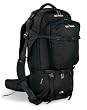
Suitcase-style backpacks are great, though, if you’ll only be carrying it in an emergency—making them perfect for city trips. There’s even a backpack with wheels available. This lets you pull it easily and comfortably—as long as the roads or sidewalks allow it. However, wheeled backpacks* are more like suitcases than backpacks, and they’re less comfortable to carry. The only exception is the Tatonka.
| Tatonka Great Escape | Vaude Rails | Osprey Farpoint 80 L |
 |  |  |
| Price as of Jan. 9, 2017 180 EUR | Price as of Jan. 9, 2017 Starting at 89 EUR | Price as of Jan. 9, 2017 Starting at 118 EUR |
| More Info / Order* | More info / Order* | More info / Order* |
Backpack Safety Tip:
There’s also a wire mesh from Pacsafe* that protects your backpack from theft. It wraps completely around your backpack, making it harder for thieves to get into your pockets. The net weighs 0.5 kg, but if you leave your trekking backpack at a hostel or hotel, you can keep your valuables safe.
The Right Packing Technique for Your Trekking Backpack

Place all heavy items close to your back and put the lighter items in the bottom compartment.
A quick tip: Use compression bags* to save space and, as mentioned at the beginning, pack various backpacking gear to save space.
What should you keep in mind with a daypack?

You’ll need a daypack for short day hikes and as carry-on luggage on planes or buses. Just like with a world-travel backpack, pay attention to the build quality (water-repellent, abrasion-resistant, high-quality construction of straps and zippers).
- Check to see if a rain cover* is included, since you’re bound to get wet at some point. If you’re bringing your laptop on your backpacking trip, make sure it has a laptop compartment.
- If you’re planning a lot of outdoor activities, look for a port for a hydration bladder.
There are also Pac Safe Backpacker backpacks* that are difficult to slash and open.
An alternative to a daypack: the shoulder/crossbody bag
Sometimes I also use a regular shoulder bag or crossbody bag. It’s especially handy for DSLR photographers, since I can quickly tuck the camera away after taking a photo. That way, not everyone will see your precious photos.
Do you have any questions, tips, or a favorite backpacking backpack?
Then I’d love to hear from you in the comments.